






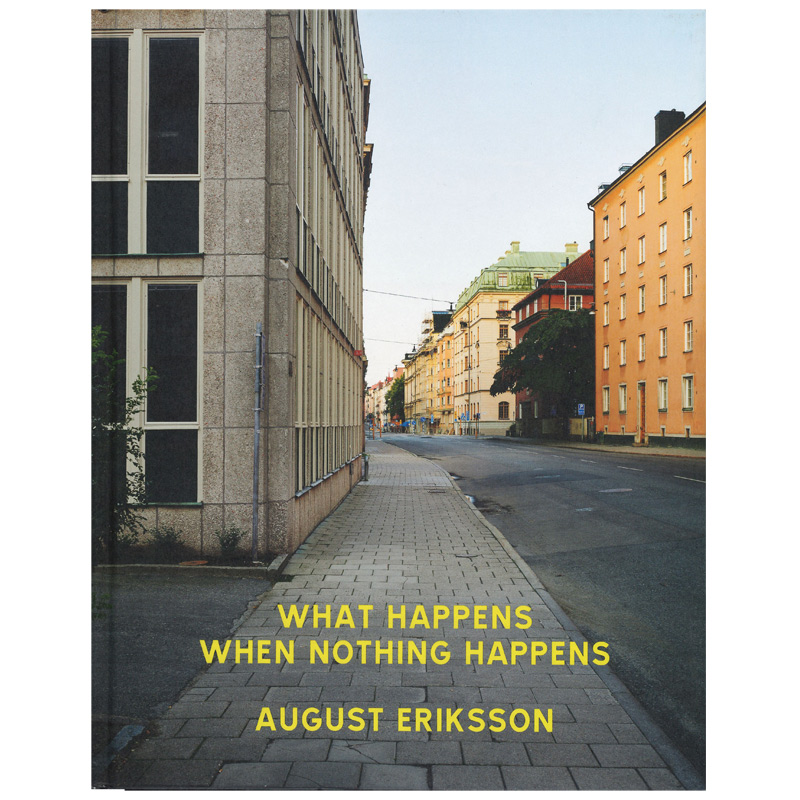
August Eriksson: What Happens When Nothing Happens
€44
Keyword: 2017-20, landscape, street photography, Stockholm, Swedish photographer
Size: 245 x 310 mm
Pages: 144
Format: hardcover
Language: English
Illustration: 66 colour
Text: Kristoffer Leandoer
Book Design: August Eriksson
Typopgraphy: Blankblank
Printing: Livonia
Publisher: Skreid/Art & Theory
Pub Year: 2020
Weight: 1235 gr
ISBN 13: 9789163990281 (Skreid)
ISBN 13: 9789198606515 (Art & Theory)
Description
Article no.: 9789198606515
Don't miss Clemens Poellinger's review attached further down!
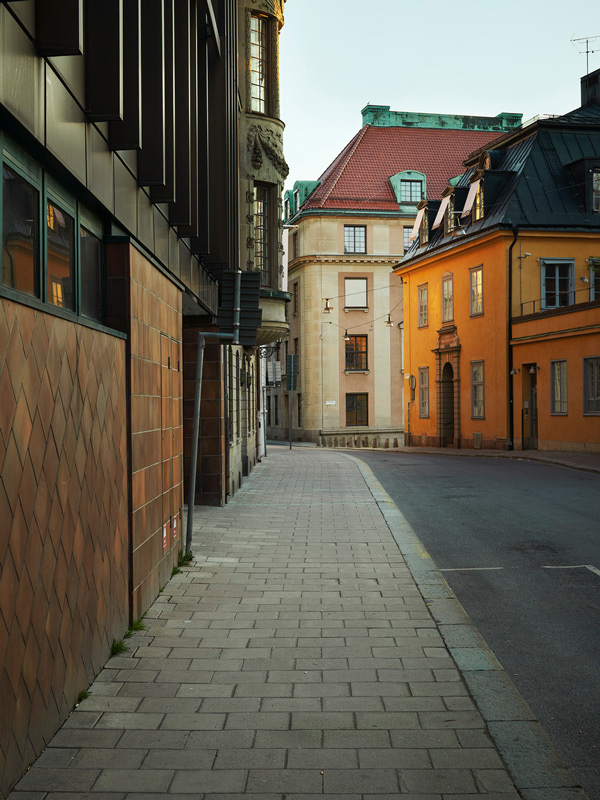
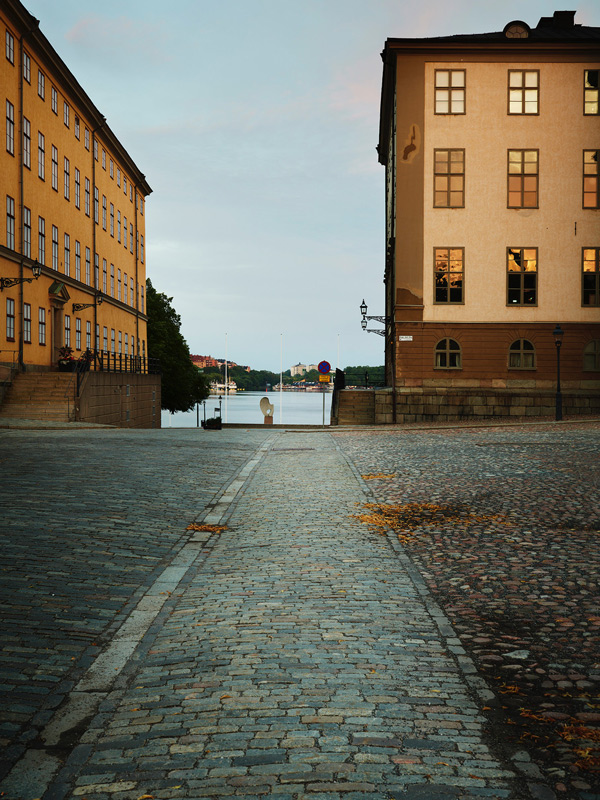
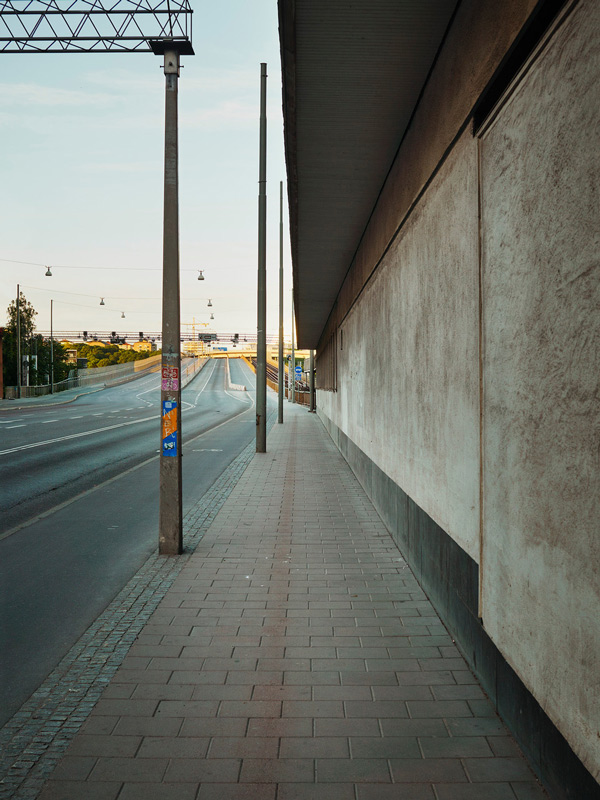
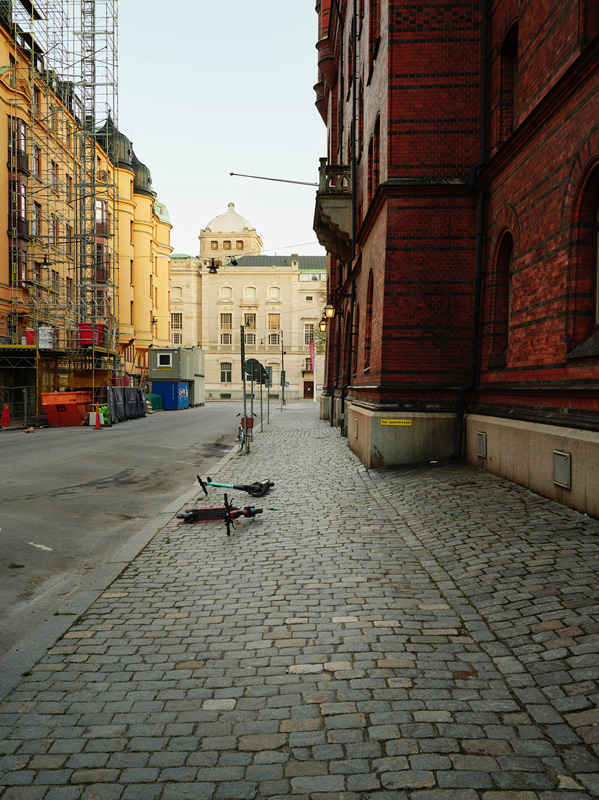
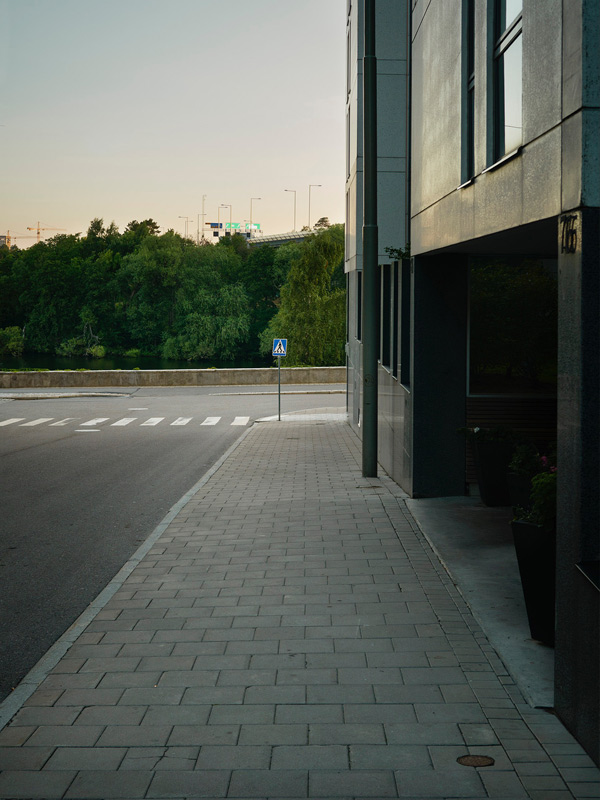
Void of people, the streets lay deserted and the city of Stockholm is seen clearer. August Eriksson set out on his walks between 3 and 5 am in the summer nights to discover or re-discover his hometown. Shifting to an urban landscape, this project is a continuation of the "The Walk" and also consists of 66 photographs.
Kristoffer Leandoer's text in the book:
“What Happens When Nothing Happens” is Eriksson's third book where he uses walking as a starting point. In 2016 Eriksson walked the Kumano Kodo pilgrimage trail east of Kyoto in Japan and in Circling the Mountain (2019), Eriksson follows the trail of a wandering monk around Mount Hiei.
In “What Happens When Nothing Happens,” he has used the same approach, the same two legs, to walk away from familiarity with his home, to walk to achieve an alienation from his own home city to be able to return to a familiar place and see it again for the first time.
The images were made over a period of three years, but they give absolutely no sense of time passing; on the contrary, they give the impression of being taken at exactly the same time, all 66 of them. Time in that sense is annulled. Or not annulled, but merged with the space in a period of time; what the Russian philosopher and literary historian Mikhail Bachtin called a chronotope.
These 66 photographs, I would contend, together constitute a single picture, a single portrait of a city in a certain state, a state that is a city: Stockholm in summer. The chronotope Stockholm in summer holds a world of conflicting emotions: endless freedom and ease, nostalgia and exhilarated intoxication, an ennui for the shortness of life that is combined with a flavour of eternity, curiosity about the unknown and a feeling of being at home.
Void of people, the streets lay deserted and the city of Stockholm is seen clearer. August Eriksson set out on his walks between 3 and 5 am in the summer nights to discover or re-discover his hometown. Shifting to an urban landscape, this project is a continuation of the "The Walk" and also consists of 66 photographs.
Kristoffer Leandoer's text in the book:
“What Happens When Nothing Happens” is Eriksson's third book where he uses walking as a starting point. In 2016 Eriksson walked the Kumano Kodo pilgrimage trail east of Kyoto in Japan and in Circling the Mountain (2019), Eriksson follows the trail of a wandering monk around Mount Hiei.
In “What Happens When Nothing Happens,” he has used the same approach, the same two legs, to walk away from familiarity with his home, to walk to achieve an alienation from his own home city to be able to return to a familiar place and see it again for the first time.
The images were made over a period of three years, but they give absolutely no sense of time passing; on the contrary, they give the impression of being taken at exactly the same time, all 66 of them. Time in that sense is annulled. Or not annulled, but merged with the space in a period of time; what the Russian philosopher and literary historian Mikhail Bachtin called a chronotope.
These 66 photographs, I would contend, together constitute a single picture, a single portrait of a city in a certain state, a state that is a city: Stockholm in summer. The chronotope Stockholm in summer holds a world of conflicting emotions: endless freedom and ease, nostalgia and exhilarated intoxication, an ennui for the shortness of life that is combined with a flavour of eternity, curiosity about the unknown and a feeling of being at home.
Files and media
 | Svenska Dagbladet review |
 | Photographer's website |